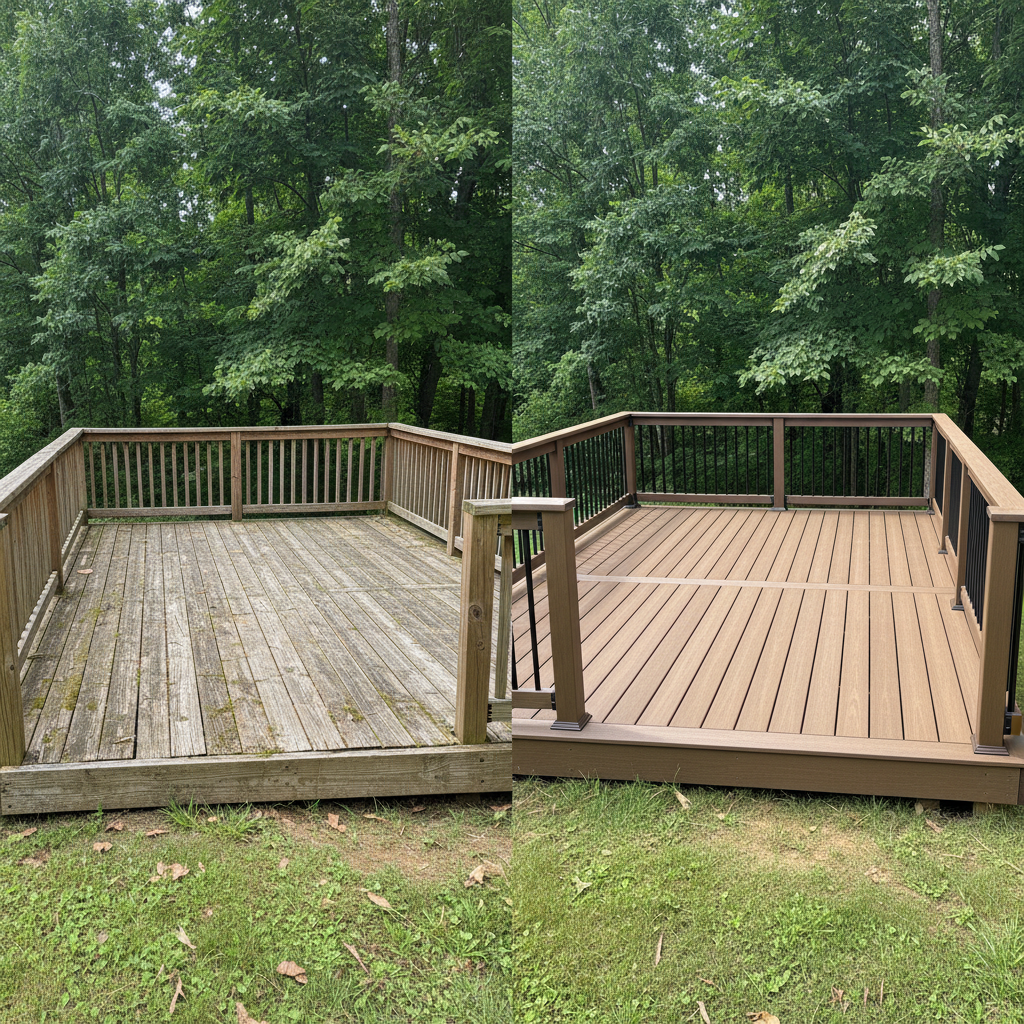
Alright, so you're thinking about a composite deck for your place here in Ringgold. Smart move. You've probably heard all the buzz about how they're low-maintenance compared to wood, and that's mostly true. But here's something a lot of folks don't realize until they're deep into planning: not all composite decking is created equal. We're talking about capped versus uncapped, and understanding the difference is key to getting a deck you'll love for years, especially with our Georgia weather.
What's the Big Deal with Capped vs. Uncapped?
Think of it like this: uncapped composite decking is the original version. It's usually a mix of wood fibers and recycled plastic, all blended together. It's still way better than wood for rot and insect resistance, but it's got some quirks. Capped composite, on the other hand, is like uncapped's younger, tougher sibling. It's got that same core, but then it's wrapped or 'capped' on three or four sides with a super durable, protective polymer shell. That cap is what makes all the difference.
Cost: Where Your Wallet Comes In
Let's not beat around the bush; cost is always a factor. Generally speaking, uncapped composite decking is going to be less expensive upfront. You might save a dollar or two per linear foot compared to a capped board. For a typical 300-square-foot deck in a neighborhood like Battlefield Parkway, that can add up to a few hundred bucks in material costs. If your budget is super tight and you're willing to do a bit more work down the line, uncapped might seem appealing.
However, when we talk about long-term value, that's where capped really shines. You're paying more upfront for a reason, and that reason is less hassle and better looks over time. It's an investment that pays off in reduced maintenance and extended lifespan.
Durability: Standing Up to Ringgold's Elements
This is where the rubber meets the road, especially here in Ringgold. Our summers are brutal. We get that intense sun, high humidity, and then those sudden, heavy downpours. That's a lot for any deck material to handle.
- Uncapped Composite: Because it doesn't have that protective shell, uncapped composite is more susceptible to fading from UV rays. It can also absorb some moisture, which might lead to mildew growth or staining if you're not on top of it. It's still resistant to rot and insects, which is a huge plus over wood, but it's not invincible against the elements.
- Capped Composite: This is the champion for durability. That polymer cap acts like a shield. It's highly resistant to fading, staining (think spilled BBQ sauce or red clay from the yard), scratches, and mildew. It basically seals the core material from the elements. This means your deck will look newer, longer, even after years of Ringgold's sun and rain. We've seen capped decks still looking fantastic even after a decade in direct sun.
Maintenance: Your Weekend Time Is Precious
One of the main reasons folks choose composite is to ditch the endless cycle of sanding, staining, and sealing that comes with wood. Both types of composite reduce that significantly, but there's a clear winner for true low-maintenance.
- Uncapped Composite: You'll still need to clean it regularly – think once or twice a year with a good scrub brush and some composite deck cleaner to prevent mildew and remove stains. If you spill something like grease or wine, you'll need to clean it up pretty quickly, or it might leave a mark. It can also show scuffs and scratches more easily.
- Capped Composite: This is as close to set-it-and-forget-it as you're going to get with decking. A simple wash with soap and water a couple of times a year is usually all it takes. The cap makes it incredibly resistant to stains, so spills are less of a panic. It also holds up better to everyday wear and tear, like moving patio furniture around.
Appearance: Looks That Last
When you first install either type of composite, they'll both look great. Modern manufacturing has come a long way, and you can get some really nice wood-grain patterns and colors in both capped and uncapped options.
- Uncapped Composite: The color tends to be more uniform throughout the board. However, as I mentioned, it's more prone to fading over time. That rich color you picked out might dull down a bit after a few years in the sun.
- Capped Composite: The cap allows for much more realistic wood grain textures and multi-tonal colors, mimicking natural wood beautifully. And because of that UV resistance, the color you choose on day one is largely the color you'll have ten years down the road. It maintains its aesthetic appeal much better.
My Recommendation for Ringgold Homeowners
After building and repairing decks around here for years at Sunrise Deck Solutions, my honest recommendation for homeowners in Ringgold, GA, is to go with capped composite decking. Period.
While the initial cost is a bit higher, the long-term benefits far outweigh that difference. The superior durability against our intense sun and humidity, the incredible stain and fade resistance, and the truly minimal maintenance mean you'll spend less time working on your deck and more time enjoying it. You won't be battling mildew as much, and your deck will keep looking fantastic for a lot longer.
Think about it: you're investing in an outdoor living space. You want it to be a place of relaxation, not another chore. Capped composite delivers on that promise better than anything else out there for our local conditions. It's the smart choice for a beautiful, worry-free deck that will stand up to everything Ringgold throws at it.